Gender and communication are two concepts that permeate all spheres of life, both private and public. Whilst gender provides us with an important sense of identity, communication is at the very core of human existence as it defines our ability to interact as social actors. In many significant respects, gender, a social construct, influences life choices, opportunities, and challenges. And to exist is to communicate.
Gender and communication reflect in everyday interpersonal relationships (intimate partnerships, families, friendships, etc.), the organisational level (workplaces, schools, religious institutions, etc.), and broader social spaces, such as the media space.
The correlation between gender and communication lies in the fact that both are socio-culturally determined, and how we communicate has much to do with our gendered identities. The advantages of effective communication, of which gendered angles play a crucial part, span from interpersonal relationships to international alliances.
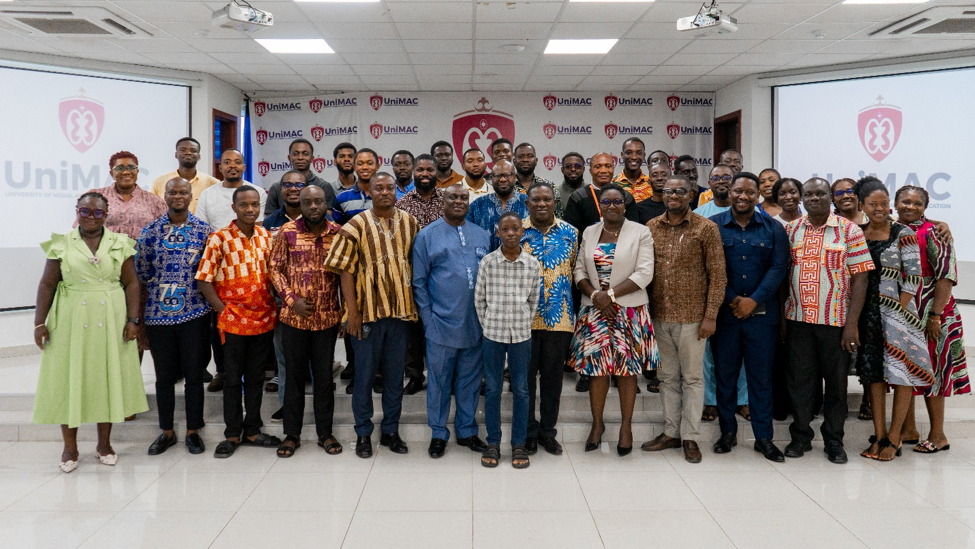
Understanding the dynamic interrelation between gender and communication goes beyond social observation. It requires more systematic and scientific approaches, which the Centre for Gender and Communication Research (CGCR) seeks to do. For clarity and focus, the CGCR defines its purpose from two broad perspectives. First, how are gender matters communicated? Second, how does gender play out in fields of communication? The two questions serve as a framework for the centre’s research and advocacy activities.
Through its activities, the CGCR contributes to the broad vision of the University of Media, Arts and Communication (UniMAC). This is to provide higher education, disseminate knowledge related to the development of the media, arts, and communication industry in the country, undertake research, and foster relationships with persons outside the university. It also aligns with Sustainable Development Goal 5, which is to achieve gender equality.