
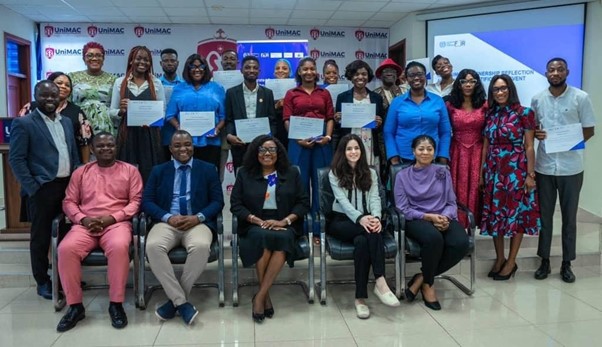
ACCRA, Ghana – In a significant boost for regional reporting and journalism, the University of Media, Arts and Communication (UniMAC) and the International Labour Organization (ILO) held a ceremony to celebrate students from UniMAC who have successfully completed a five-month cross-border reporting programme focused on the complexities of labour migration.
The Chair for the programme, Prof. Christiana Hammond (the Rector for UniMAC’s Institute of Journalism) expressed her deepest appreciation to the ILO for helping to build student capacity in labour migration communication and cross-border reporting on issues of labour migration.
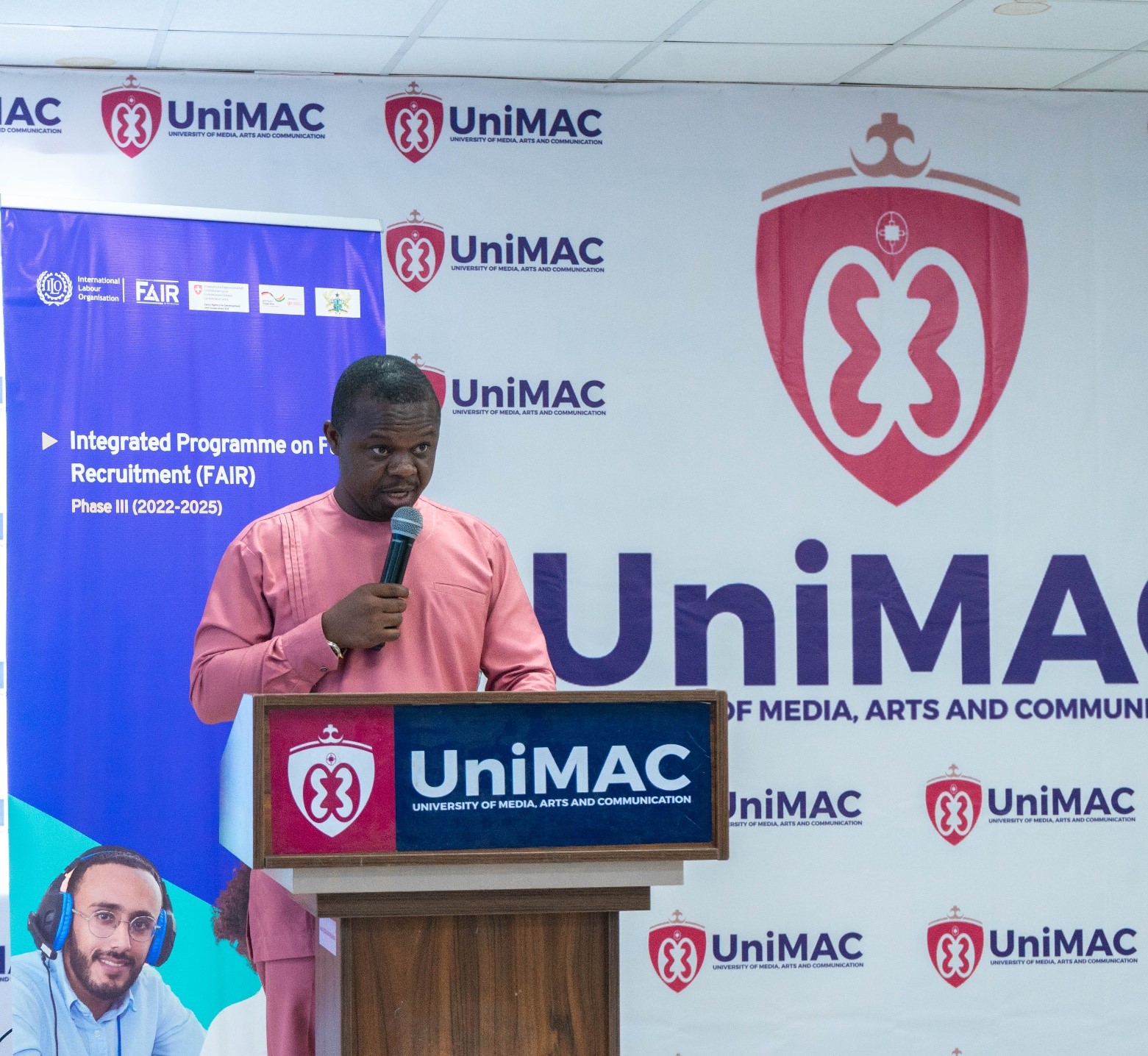
Presented a progress report on the UniMAC-ILO partnership programme, the Dean of the Faculty of Communication and Liberal Studies (FOCALS), Dr. Daniel Odoom, underscored the significant strides made under the partnership. Gains made from the partnership, according to Dr. Odoom, include faculty capacity development, student training, and course development. He concluded by indicating that the partnership has improved the visibility and brand of UniMAC within the sub-region and beyond.
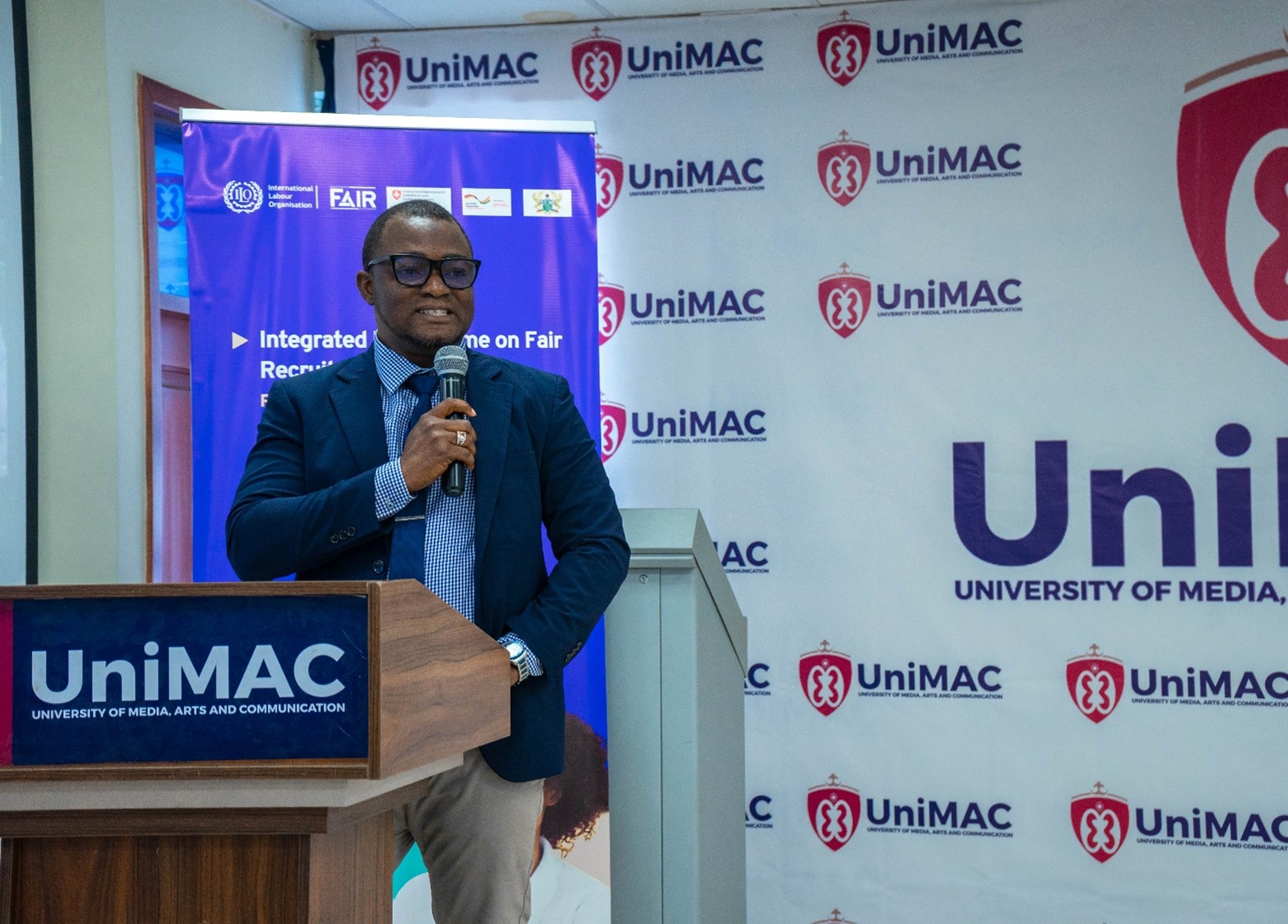
The National Project Coordinator of FAIR Recruitment Phase III, Mr. Kamil Abubakari commended UniMAC for its commitment and leadership in labour migration communication and migration-centric reporting throughout the partnership.
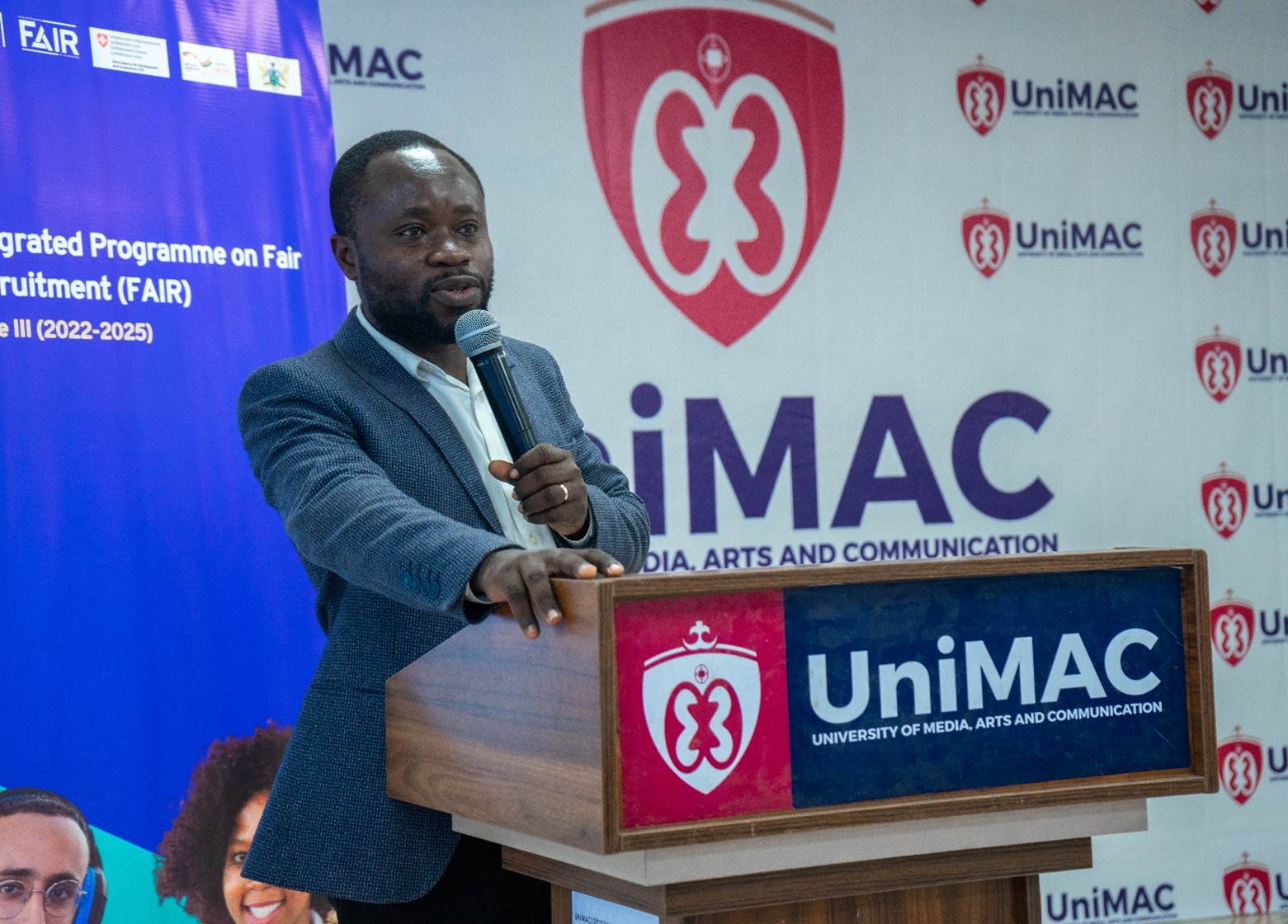
Moderating the event, Mr. Kow Payin Nketsia-Richardson, Unit Head for Branding and Communications led participants to showcase the knowledge and skills they have received on how to report on cross-border labour migration issues after the mentorship training. The mentorship training brought together twenty-seven (27) students from FOCALS at the Institute of Journalism (IJ), UniMAC in Ghana, and the School of Media and Communication at Pan-Atlantic University (PAU) in Lagos, Nigeria. The students selected from UniMAC are part of the Bachelor of Arts in Development Communication rogramme in the Department of Communication. Their Nigerian counterparts are Bachelor of Arts Journalism students in the Department of Communication, Media and Cultural Studies.
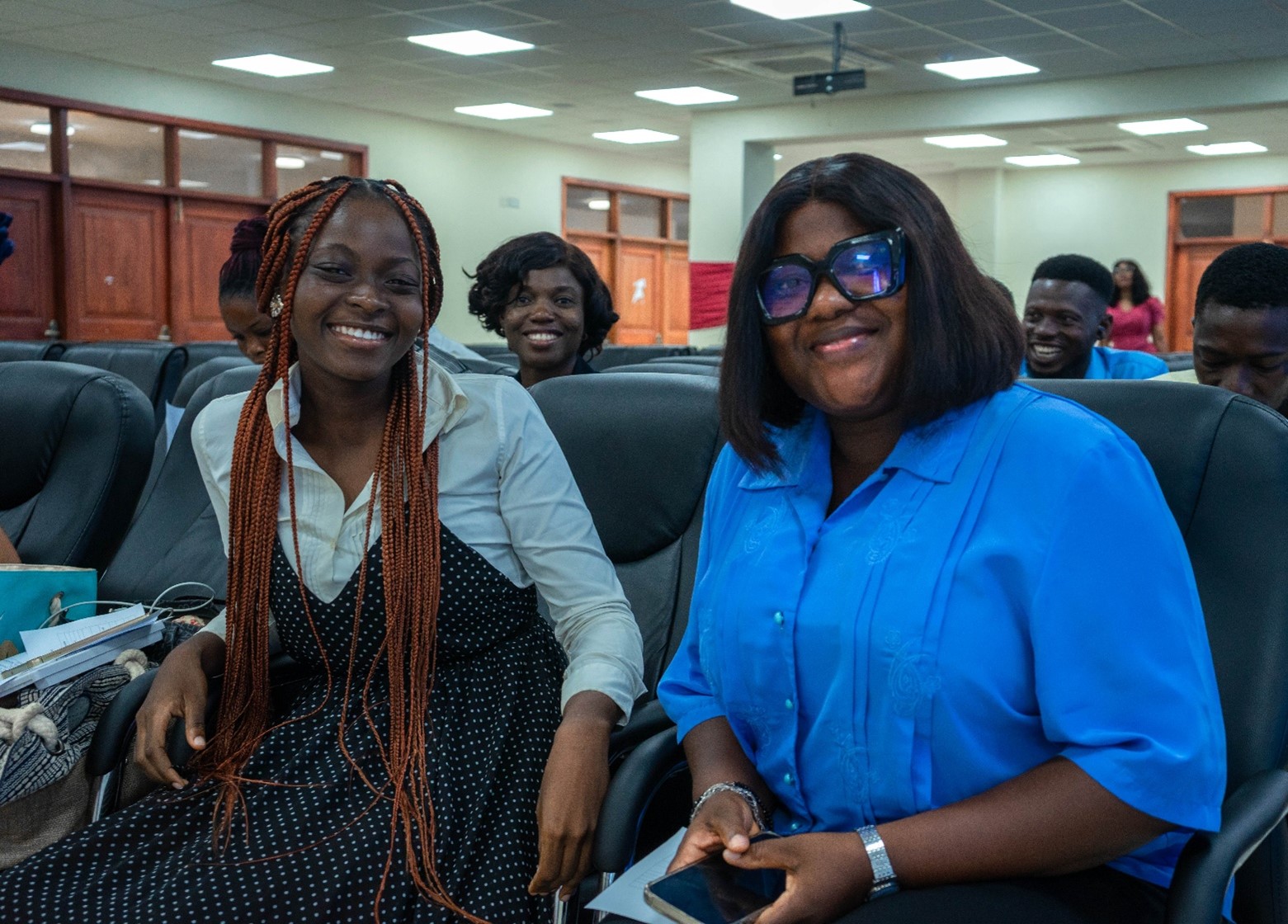
The project required participants to navigate the challenges of international remote collaboration, from defining research questions and collecting data to conducting field interviews across two countries. Under the guidance of Dr. Daniel Odoom, Dean of FoCaLS – UniMAC and Prof. Chike Mgbeadichie, Head of Department of Communication, Media and Cultural Studies at PAU, the students worked in bi-national teams to produce eleven (11) in-depth reports. At the end, the collaboration culminated in an official graduation ceremony held recently in Accra, where students were awarded diplomas for their investigative work.
Bridging the Corridor
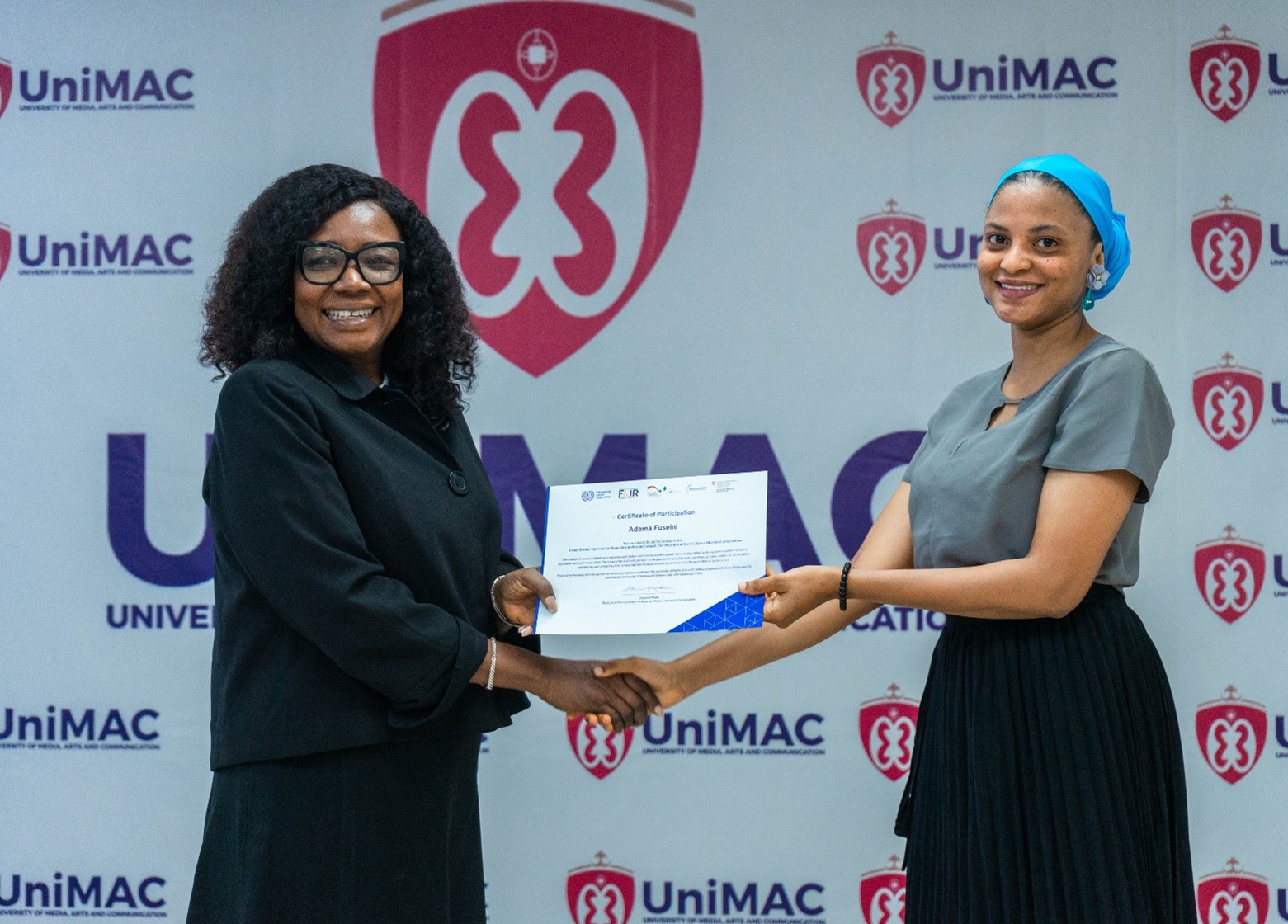
The reports covered a diverse spectrum of migration experience. One of the featured projects, produced by Adama Fuseini (a student of UniMAC), Ebube Kpajie, and Emmanuella Oboro (student of PAU), explored the precarious lives of West African traders. Their work highlighted how these entrepreneurs “walk the line between opportunity and survival” while traversing the busy trade corridors between Ghana and Nigeria. Other student teams focused on labor trends in the creative industries, the lives of culinary workers, and the increasing phenomenon of student migration within the continent.
A New Model for Journalism Education
According to Melanie Belfiore (ILO Team Lead), this project marks the third installment of a cross-border initiative supported by the FAIR programme. It follows previous successful pilots conducted between Uganda and Jordan, and Côte d’Ivoire and Tunisia. As the media landscape becomes increasingly globalised, experts say integrating cross-border skills into the classroom is essential. By working across jurisdictions, students not only learn the logistics of international reporting but also gain a deeper, more nuanced understanding of regional issues like labor rights and migration. The success of the programme was made possible through the support of the ILO FAIR team, including Melanie Belfiore, Kamil Abubakari, Austin Erameh, and Grace Orshio.
Impact and Resources
The collaboration has resulted in a comprehensive anthology of stories that offer a rare, ground-level look at how migration shapes the economies and social fabrics of West Africa (see attached document).This programme sets a new benchmark for journalism education in Africa, proving that when the next generation of storytellers look beyond national borders, the entire region benefits from clearer, more connected narratives.
The Way Forward
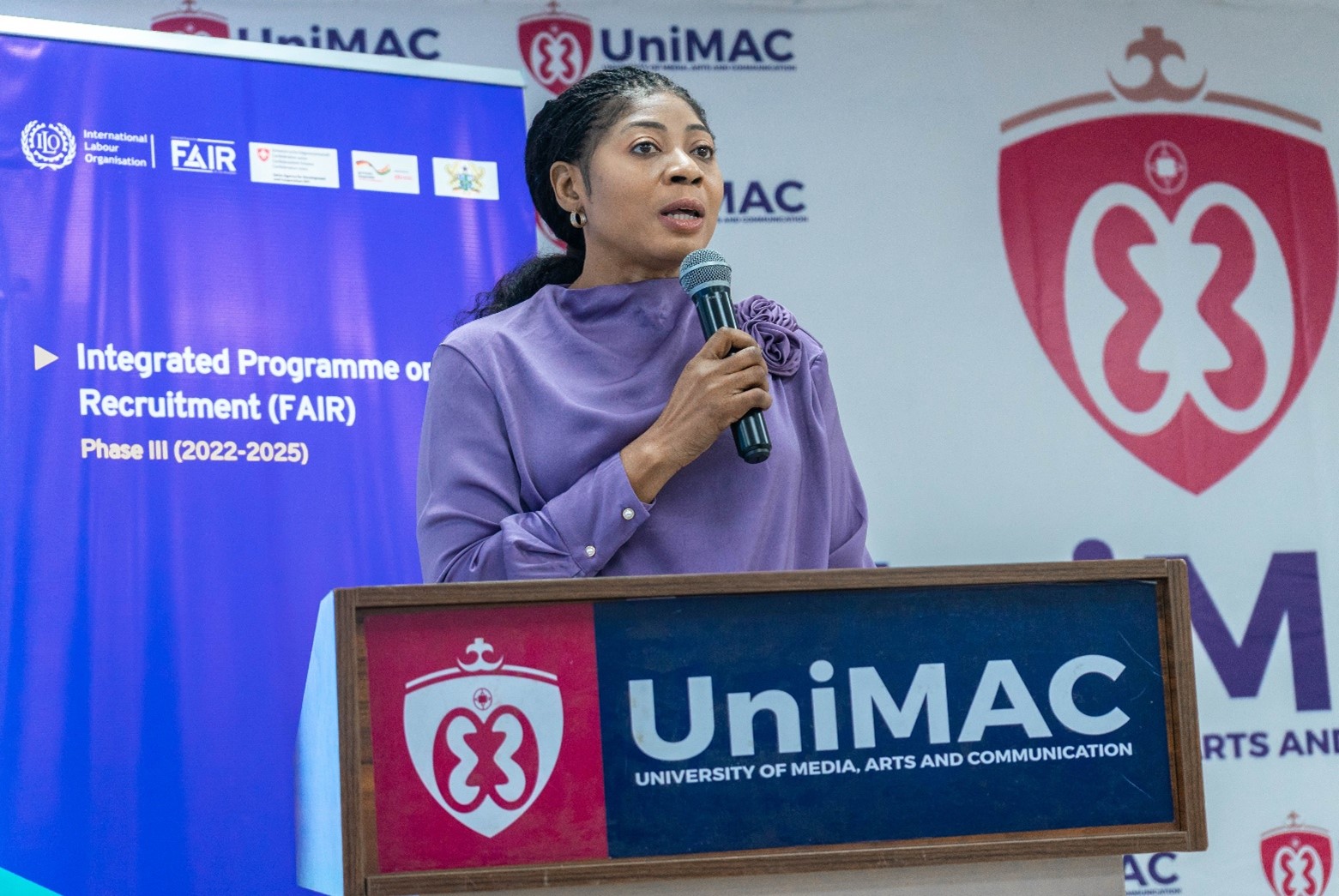
In her concluding remarks, Dr. Lawrencia Agyepong, Director of the Centre for Global Education and Collaboration (CGEC) at UniMAC, intimated that the UniMAC-ILO partnership has been a very useful partnership which has been mutually beneficial to the two parties. She praised the efforts and commitment made by the two institutions right from the beginning of the partnership leading to the tremendous successes chalked. She concluded by indicating that the strides made from the partnership should challenge the two institutions to leverage on the power of communication and journalism to promote sustainable fair recruitment and labour migration for social transformation.
Other dignitaries who graced the occasion are Prof. Etse Sikanku – Dean, School of Journalism and Media Studies, Dr. Priscilla Teika Odoom – Dean, Faculty of Business and Strategic Communication, Nana Dr. Adu-Bempah Brobbey – Head, Department of Liberal Studies, Ms. Nana Efua Rockson – Director of Public Affairs, Mrs. Edwina Quartey – Faculty Officer (FOCALS), and Ms. Mary Anum – Assistant Registrar at CGEC.
UniMAC is the only specialised public university for media, arts and communication education in Ghana, uniquely positioned to deliver excellence in Media, Arts and Communications education at the tertiary level. This project, successfully completed by students, goes to demonstrate how theory and practice are the bedrock of holistic education at UniMAC, to prepare students for the 21st Century world of work.